Charting the Interplay Between Variant Rules and Community-Driven Strategy Guides in Licensed Digital Poker Spaces
Mia Berger · Sep 28, 2026
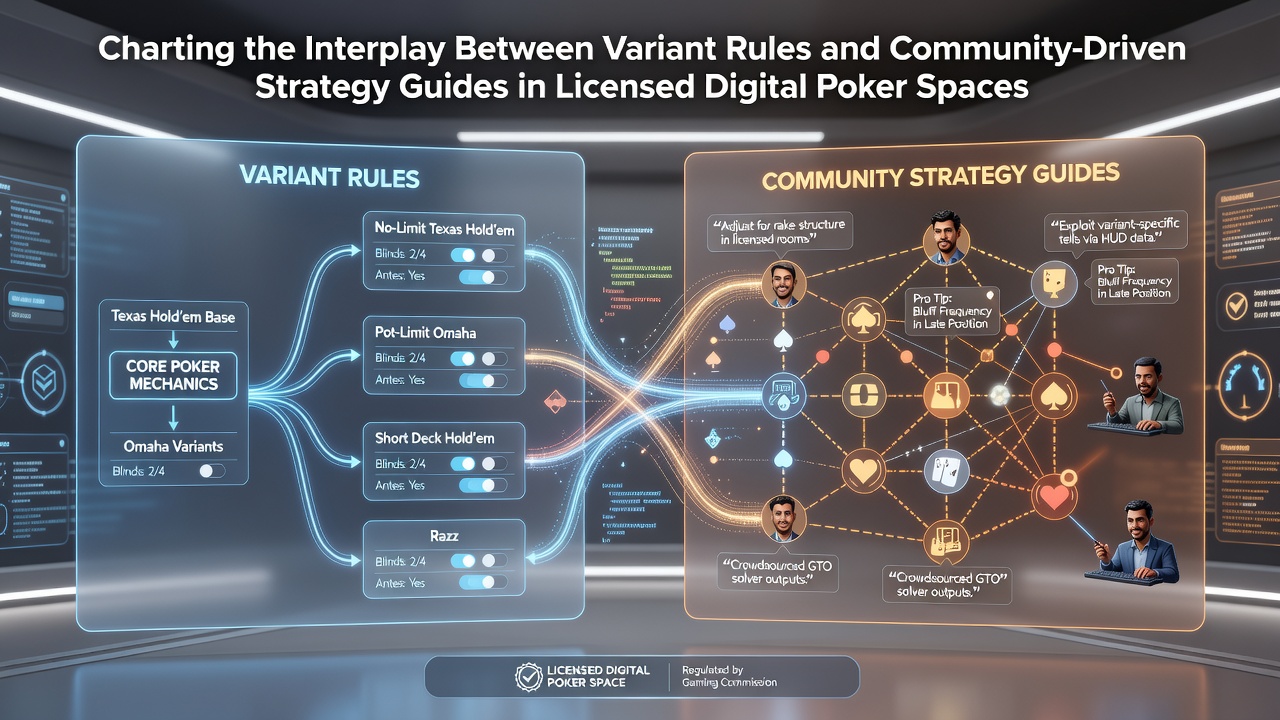
Charting the Interplay Between Variant Rules and Community-Driven Strategy Guides in Licensed Digital Poker Spaces
Variant rules in poker establish distinct frameworks that shape gameplay across formats such as Texas Hold'em, Omaha, and Seven-Card Stud, while community-driven strategy guides compile shared observations from players who participate in licensed digital environments. These elements interact continuously as rule variations prompt adjustments in recommended actions, and aggregated player data refines the guides over time. Licensed platforms maintain regulatory oversight that requires transparent rule documentation, which in turn supports the development of accurate community resources.
How Variant Rules Define Core Mechanics
Each poker variant operates under specific constraints that alter betting structures, hand formation, and decision points, and these constraints directly influence the tactics documented in strategy materials. Omaha requires players to use exactly two hole cards combined with three community cards, whereas Texas Hold'em permits any combination of the two private cards with the five shared ones, and such differences generate separate branches in strategy compilation. Researchers at academic institutions have documented how these mechanical distinctions lead to divergent probability calculations, with data sets from regulated operators showing measurable shifts in optimal ranges for starting hands across variants.
Seven-Card Stud introduces additional layers through its street-by-street dealing and absence of community cards, which forces strategy guides to emphasize memory of exposed cards and positional awareness in ways that differ from flop-based games. Licensed operators must publish these rule sets clearly to comply with jurisdictional standards, and that transparency allows community contributors to build guides that reference exact parameters rather than generalized assumptions.
Community Strategy Guides as Aggregated Knowledge Bases
Players in licensed digital spaces contribute to strategy guides through forums, shared databases, and annotated hand histories that capture patterns emerging from repeated play. These guides evolve as participants upload results from sessions governed by particular rule sets, creating living documents that reflect both successful lines and adjustments required by variant-specific constraints. Observers note that guides often segment content by variant, with separate sections detailing preflop ranges, postflop betting frequencies, and river decision trees calibrated to the distinct information structures of each game.
Data trails from licensed applications reveal how community edits accumulate, with contributors cross-referencing regulatory rule filings to verify accuracy before updating entries. One documented case involved a multi-variant guide that incorporated hand examples from European operators, where rule clarifications issued in early 2025 prompted revisions to bluffing frequency charts for Pot-Limit Omaha. Such updates demonstrate the feedback loop between official rule documentation and community synthesis.
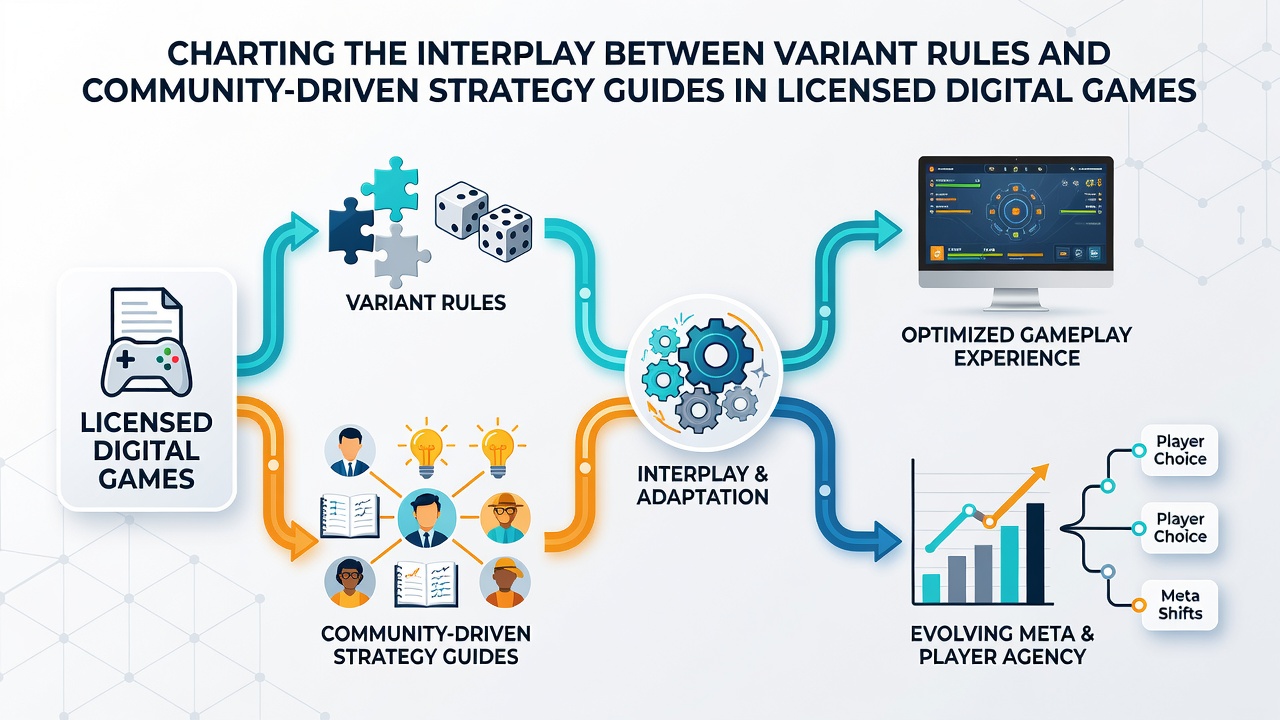
Interplay Mechanisms in Licensed Environments
The interplay manifests when rule updates from licensing authorities trigger corresponding revisions in community guides, and when aggregated player performance data highlights previously underemphasized aspects of variant play. For instance, changes to minimum bet sizing or maximum raises in certain jurisdictions necessitate recalculation of pot odds and implied odds within guides, and contributors incorporate these adjustments promptly to maintain relevance. Industry reports from organizations such as the European Gaming and Betting Association indicate that operators in multiple regions release quarterly rule summaries, which community maintainers then integrate into their resources.
Conversely, community guides influence how new players interpret variant rules by providing contextual examples that go beyond official rule text. A player encountering Razz for the first time might consult a guide that illustrates low-hand construction through real hand histories rather than abstract descriptions, and this supplementary layer accelerates comprehension while remaining anchored to the licensed rule framework. Research papers from Canadian regulatory analyses have tracked similar patterns, noting that engagement with community resources correlates with faster adaptation to rule variations across formats.
Yet the dynamic remains bounded by licensing requirements that prohibit the dissemination of certain real-time data or collusion tools, so strategy guides focus on historical aggregates and theoretical modeling instead. This boundary preserves the integrity of the interplay while directing community efforts toward rule-compliant content.
Regional Variations and Data Sources
Licensed spaces in different jurisdictions exhibit distinct emphases in both rule presentation and community guide development. Australian regulatory frameworks, for example, require detailed variant disclosures that feed directly into player education modules, while certain North American state commissions publish comparative charts across poker formats that community authors reference when building cross-variant strategy sections. These regional differences create a mosaic of resources that players navigate when moving between platforms.
Academic studies continue to examine the volume and accuracy of community contributions relative to official rule texts, with findings indicating that guides achieve higher fidelity when they cite specific regulatory documents. One analysis covering multiple operators found that variants with more complex dealing procedures, such as Stud variants, generate denser community documentation because players require additional support to internalize the mechanics.
Conclusion
The relationship between variant rules and community-driven strategy guides in licensed digital poker spaces operates through iterative cycles of rule clarification, data aggregation, and resource refinement. Licensed operators supply the foundational parameters, communities synthesize performance patterns into accessible guides, and the resulting materials help participants navigate the mechanical distinctions that define each format. As regulatory environments evolve and new data accumulates, this interplay sustains a continuously updated knowledge ecosystem grounded in verifiable rule sets and shared play records.